
Kynetec’s latest research examines how veterinarians, alongside pet owners and industry professionals, view environmental sustainability and the climate crisis.

New infographic
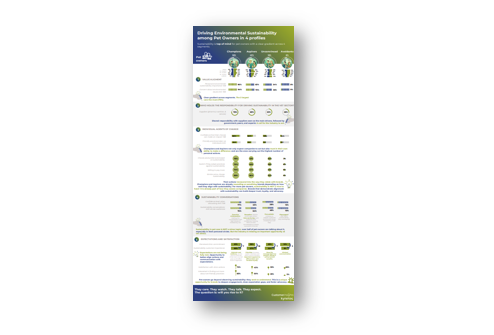
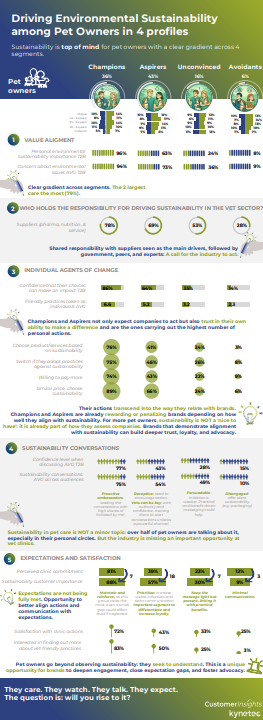
Everything you need to know about pet owner sustainability at a glance
Case Study
Situation
In the world of veterinary medicine, sustainability means everything from the responsible use of antimicrobials to recycling plastic waste in-clinic.
Every decision we make impacts animal health, ecosystems, and future generations. But what do veterinary professionals, pet owners, and those in the wider industry do to support environmental sustainability? What are their ambitions, and how to do they expect these ambitions to shape the future?
Importantly, the research also looks ahead to the future of the veterinary profession, capturing hopes and expectations for how the industry can play a leading role in driving meaningful, lasting environmental sustainability.
Kynetec’s Veterinary Sustainability Whitepaper explores the influence of environmental sustainability on everyday decision-making - from clinical recommendations and approaches to pet care, through to business operations and client interactions.
We surveyed 519 veterinary professionals, 1,207 pet owners and 35 industry professionals across the US, France, UK and Germany. We discovered what they had to say about environmental sustainability within their personal and professional context, what personal role they played, and expectations held of other animal health stakeholders to work towards a more positive environmental future.
The resulting whitepaper highlights key trends from the survey results, including revealing some insights we couldn’t have predicted.
Overarching Challenge
What does environmental sustainability mean? For Veterinarians, and their clinic, it’s recycling, reusing, reducing and sustainable sourcing. For Pet Owners and their pets, it’s environmental consumerism and responsible pet ownership. For the Animal Health Industry profession, it’s recycling, reusing, reducing and ecosystem impact.
We conducted an online survey to learn more about their motivations and opinions.
Cost of not finding a solution
This research is particularly valuable for the animal health industry because it highlights the ways in which sustainable practices can directly benefit both animals and people.
By understanding how veterinarians, pet owners, and industry professionals approach sustainability, we can identify opportunities to reduce environmental impact while improving animal welfare, promoting healthier ecosystems, and supporting responsible business practices. This insight helps the veterinary industry lead by example, demonstrating that caring for the planet and caring for animals go hand in hand.
Without reinforcing this conversation, the industry risks standing still.
Solution
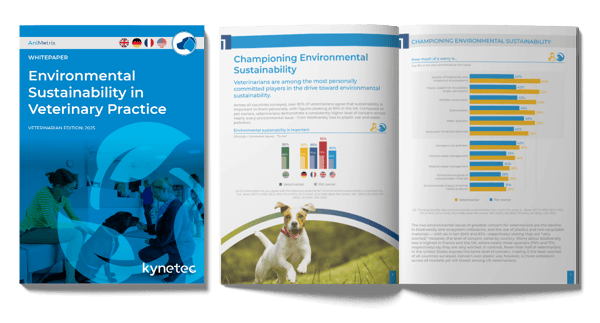
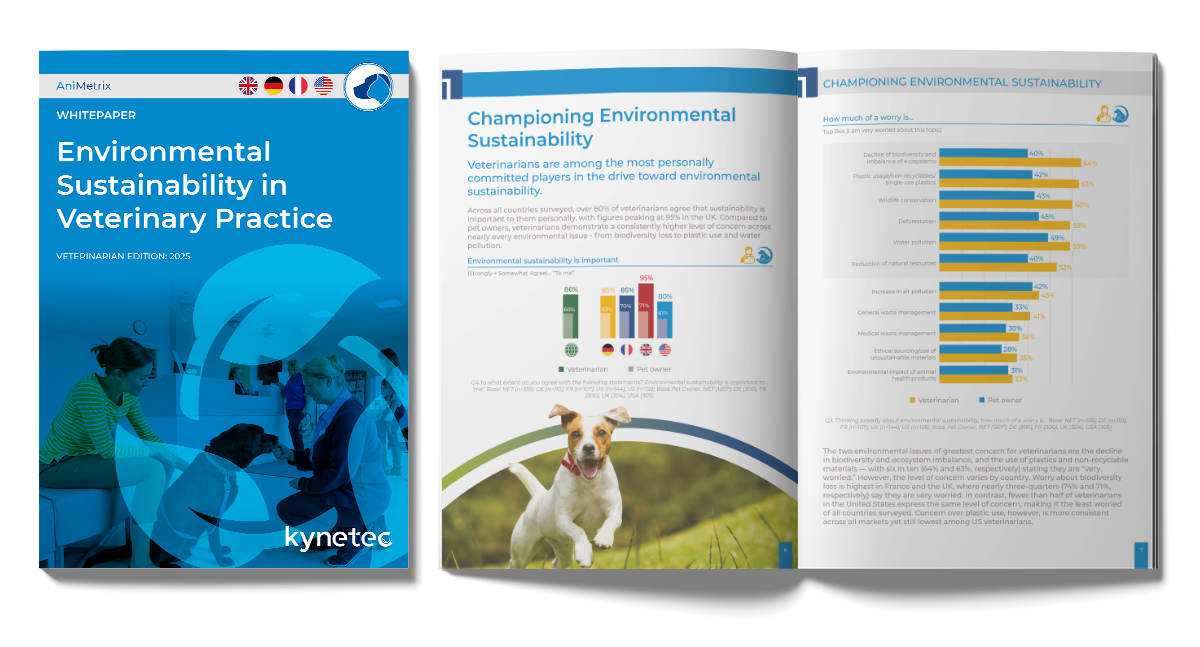
Our 38-page PDF “Environmental Sustainability in Veterinary Practice” 2025 is available for free download
Results
As a result of the data collected, we defined five key trends in sustainability in the veterinary industry:
1. Championing Environmental Sustainability
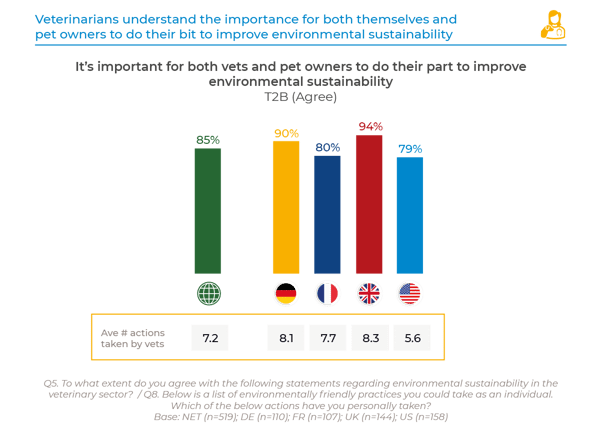
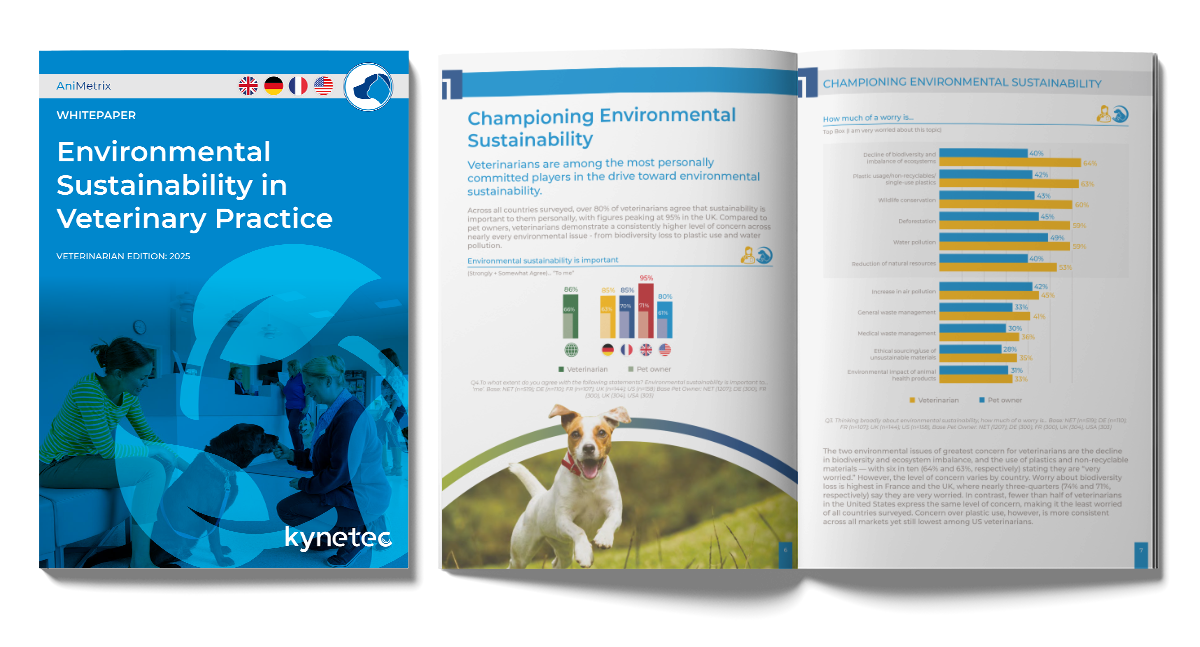
Veterinarians are among the most personally committed players in the drive toward environmental sustainability. Across all countries surveyed, over 80% of veterinarians agree that sustainability is important to them personally, with figures peaking at 95% in the UK. Compared to pet owners, veterinarians demonstrate a consistently higher level of concern across nearly every environmental issue - from biodiversity loss to plastic use and water pollution.
2. Invisible Effort
Veterinary clinics and suppliers are taking meaningful steps toward environmental sustainability, but many of these efforts remain unseen by pet owners. According to our survey data, 1 in 5 (22%) pet owners globally are not aware of a single action their clinic is taking to reduce its environmental impact, nearly twice that of veterinarians (12%).
When considering the veterinarian/supplier relationship, only 16% of veterinarians agree that clinic suppliers have clear, environmentally friendly practices and services.
35% of clinics in Europe are not aware of any sustainability actions taken by their suppliers. And, 65% of veterinarians have never had a sustainability conversation with a supplier. Conversely, 46% of suppliers have never discussed the subject with veterinarians.
This lack of communication and direction could reduce motivation to work as a collective towards a more sustainable future.
3. Thirst for Knowledge
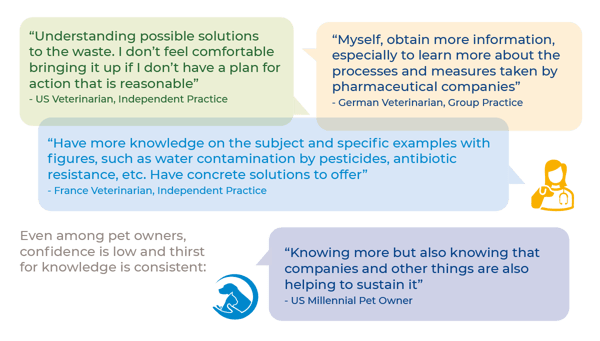 The “invisible effort” has another serious implication: despite high levels of concern and personal commitment, many veterinarians rarely initiate sustainability conversations with pet owners, and veterinarians report low confidence discussing these topics in professional settings - especially with clients and suppliers. Our data shows that only 31% of veterinarians say they’ve initiated conversations around environmental sustainability with pet owners, suggesting a missed opportunity in client engagement.
A lack of confidence is likely a contributing factor. Only two in five veterinarians (40%) feel any confidence in discussing environmental sustainability with pet owners - significantly lower than with their colleagues (60%) and even their employers (44%). In contrast, pet owners report higher confidence in raising the topic themselves, with just over half (51%) saying they feel comfortable discussing environmental sustainability with their veterinarian or veterinary nurse/technician.
Despite the lack of confidence and engagement, environmental sustainability is an area of high interest to veterinarians. 77% want to learn more, and 68% call for better information on the subject.
So, despite just 9% of veterinarians saying they have previously participated in climate-related CPD, there is an appetite for increased training opportunities, both in-clinic and with suppliers.
 4. Generational Paradox
Environmental engagement varies sharply by generation, creating a paradox in veterinary sustainability efforts. But you may be surprised which generation is the most engaged.
Baby Boomer pet owners are the most action-oriented group. They take the highest number of environmentally friendly actions such as recycling, reusing resources, and reducing waste. The paradox, however, is that they are also least likely to be engaged in conversation about sustainability by veterinarians.
On the other end of the spectrum, Gen Z pet owners show lower levels of conviction in sustainability overall. They are the least likely to say environmental sustainability is important to them (55% versus 66% globally) and more often feel their clinic isn’t doing enough – 1 in 5 (20%) disagree that their clinic is doing enough, higher than all other generations.
Millennial pet owners are currently the sweet spot generation. They are more likely to speak with their veterinarian about sustainability and feel the most confident to open conversations about sustainability with their veterinarian (58% versus 46% among Gen Z pet owners) and also their veterinary nurse/technician (53% vs 37% among Boomers).
Gen X pet owners, often under-discussed, are equally as engaged, but more likely than Boomers to say they would pay more for sustainable products (47% vs 39% among Boomers). They are also less likely to have veterinarians initiate conversations with them about sustainability than Millennials or Gen Z pet owners (14% versus 37% and 30% respectively).
5. Shared Accountability
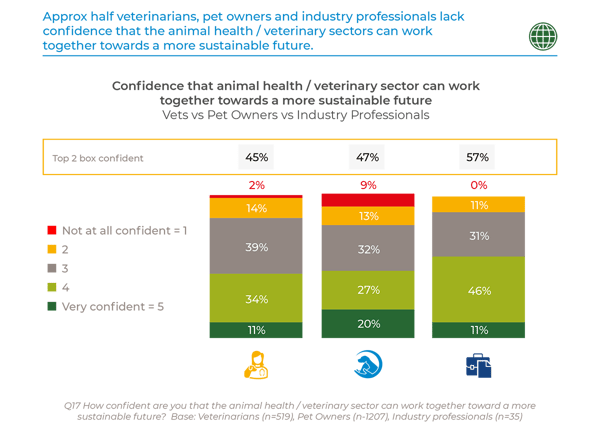
Environmental sustainability in veterinary care is not the sole responsibility of clinics - it is a shared duty across the animal health value chain. While clinics and veterinarians are central players, pet owners, suppliers, pharmaceutical and nutrition companies, and service providers all have critical roles to play. But what do they all think of one another? And who is considered the ‘most’ responsible? There is a disconnect between expectations and action.
INFOGRAPHIC
Conclusion
In the latest whitepaper, we explore how these perspectives are shaping engagement with veterinarians both personally and professionally.
You can now download the 38-page whitepaper, filled with fascinating insights that may challenge your perspective.
DOWNLOAD
Conclusion
In the latest whitepaper, we explore how these perspectives are shaping engagement with veterinarians both personally and professionally.
You can now download the 38-page whitepaper, filled with fascinating insights that may challenge your perspective.



.jpg)

-1.jpg)


.jpg)