Thought Leadership Articles Building Decision-Grade Scenario Intelligence

Beyond the Forecast: Building Decision-Grade Scenario Intelligence

How ground-truth agricultural intelligence, forecasting, domain expertise and generative AI come together to help businesses understand what is happening in crop protection and explore what could happen next.

Why forecasting alone is not enough

For organizations operating in agriculture, understanding the future means more than knowing what is most likely to happen. Forecasting provides a stable, evidence-based view of expected market outcomes. But agricultural markets are influenced by weather, regulation, supply chains, geopolitics, currencies, farm economics and changing Farmer behaviour. When these factors change, businesses need to understand how different assumptions could affect the market. This creates a need for decision-grade scenario intelligence: a way to explore plausible alternatives while remaining grounded in how the market actually behaves. That starts with industry intelligence.

connection  copy

Building a connected view of the market

Industry intelligence is not simply the collection of more data. It is about connecting observations, understanding relationships and continuously learning as the market evolves.

For crop protection, this means bringing together a broad view of farmer behaviour, active ingredients, regulations, patents, weather, sustainability and wider market dynamics across more than 40 countries.

Ground Truth Data

At the foundation is ground-truth data: what farmers actually plant, spray and pay for.

 

agriculture (icons2)-02
40+

countries

farmer cion
200,000+

farmers across wide range of crops

agriculture (icons2)-03
12 yrs

of historical learning

Kynetec's global crop protection intelligence draws on more than 200,000 farmers surveyed annually, covering 40+ countries, 14 crop groups and more than 1,000 active ingredients, supported by approximately 12 years of historical market learning.

Roughly two-thirds of the global ground truth comes from direct farmer observation, complemented by Kynetec's network of market experts closest to distribution and channel activity.

Around that foundation sits the broader agricultural information landscape: supply, trade, regulation, weather, agronomy, technology, sustainability, and competitive market dynamics.

These come together into one picture of the crop protection market, so that individual observations sit inside the wider system that influences them.

Market Structure and Learning

Observation provides the raw material. The architecture determines whether it becomes understanding. Signals must be organized, connected, and interpreted within a coherent framework. Relationships need to be identified, patterns need to be learned, and observations need to be placed within a broader market context. When these elements come together, an intelligence system becomes a framework for understanding what is shaping the market and why.

Global CP Intelligence mirrors the industry's natural hierarchy, spanning regions, countries, crop groups, indications, and active ingredients. Within that structure, markets retain their own characteristics. A patent expiry in Brazil, for instance, does not play out the same way it would in India or the EU. The same regulatory event, supply disruption, or technology shift can have very different consequences depending on local market structure, farmer behaviour, competitive intensity, and available alternatives.

The system is designed to learn those differences. The system can therefore learn local behaviour without losing sight of broader market patterns. Relationships emerge from observed evidence rather than predefined assumptions.

professional-woman-focused-on-data-analysis-at-her-2026-10-08-16-22-07-utc copy

Domain Expertise and Human Judgment

Agronomic, regulatory, commercial, and industry expertise help shape how the system interprets the market. Definitions are refined, assumptions are challenged, and outputs are continuously tested against practical experience.

While presented here as the third layer, it should not be mistaken for a secondary one. Most practitioners would recognise that this is often the layer that makes or breaks the quality of the system. Combining data and expert judgement narrows the distance between statistical patterns and real-world market behaviour.

This together creates a connected foundation for understanding not only what is happening, but how different parts of the market influence one another.

From market intelligence to forecasting

data agri

The Kynetec Global Crop Protection Forecaster builds on this intelligence to provide a data-driven view of expected market outcomes.

But a forecast represents a baseline. It answers:

What is most likely to happen based on current assumptions?

Scenario analysis asks a different question:

What could happen if those assumptions change?

 

AdobeStock_343503546 copy-4

Exploring alternative futures

The Scenario Modeler allows users to explore alternative outcomes without changing the underlying forecasting model.

Users can introduce their own assumptions around factors such as planted area, pest pressure, upstream costs, active ingredient availability or exchange rates.

It can also be used to examine short-term shocks, including tariffs, regulatory announcements, geopolitical disruptions or supply constraints.
 

For example:

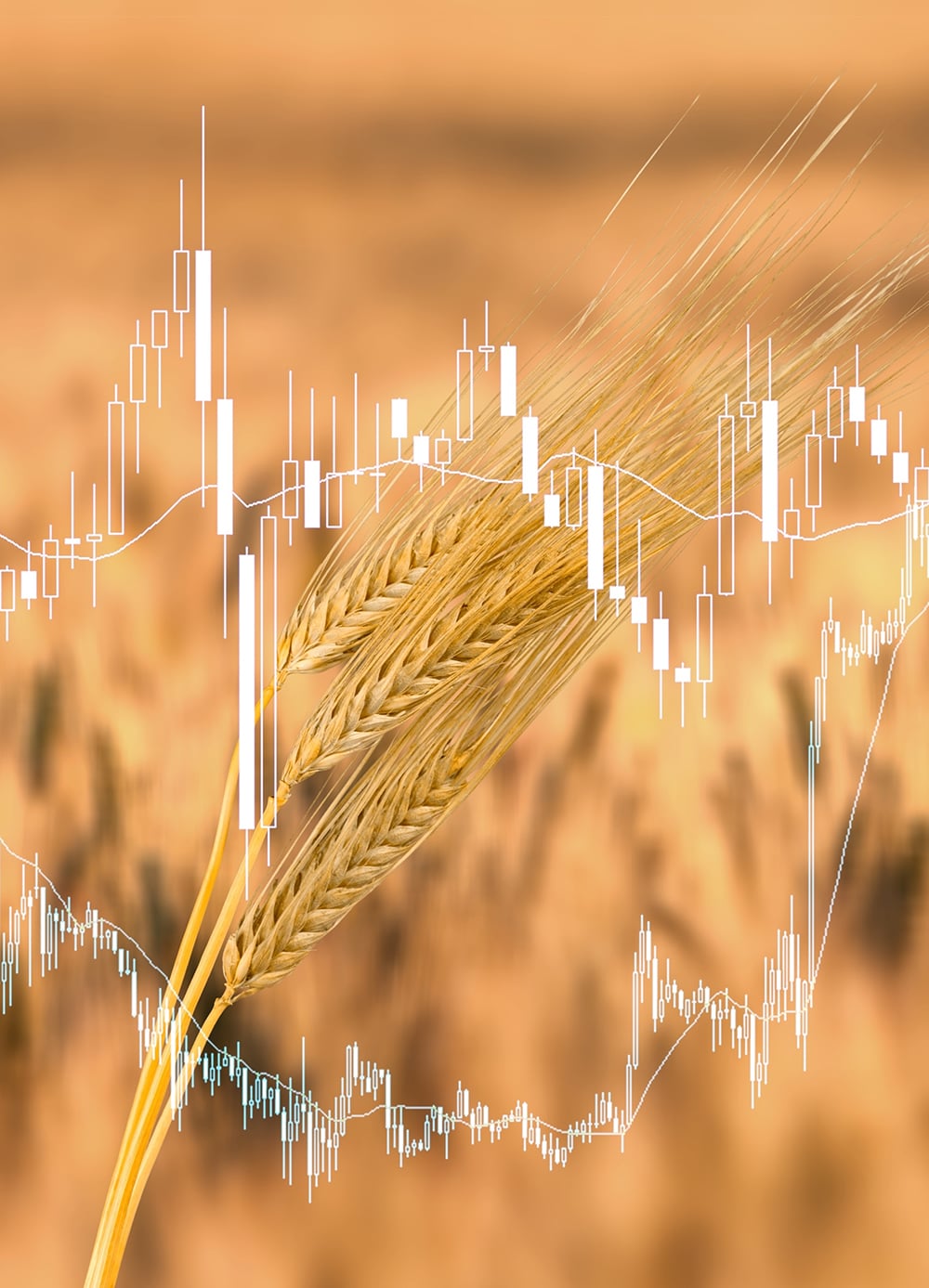
  • What if Brent crude oil stabilizes at USD 75 per barrel?
  • What if a significant El Niño event occurs in 2027?
  • What if active ingredient availability becomes constrained in a key sourcing region?

The purpose is not to predict every possible future. It is to provide a structured way to understand how different assumptions could influence market outcomes.

Combining generative AI with model discipline

Generative AI makes scenario exploration easier to access. Users can describe questions in natural language rather than navigating complex analytical workflows.

But generative AI alone is not sufficient for decision-grade numerical analysis.

AI-generated outputs can vary with phrasing, lack transparency and produce plausible results that are not necessarily grounded in observed market behaviour.

This creates a fundamental tension:
Forecasting models are structured but inflexible. Generative AI is flexible but numerically unstable.

The approach is therefore to use AI as an interaction and reasoning layer above the forecasting models, rather than as the predictor itself.

The AI helps interpret questions, identify relevant drivers and explain results. The numerical outputs remain bounded by relationships learned through proprietary agricultural data and forecasting models.

This brings together the flexibility of generative AI with the discipline of model-based forecasting.

AdobeStock_537059738 copy-1

Capturing how markets really behave

Agricultural markets are nonlinear. The impact of a particular driver can vary depending on geography, crop, market conditions and other factors.

The modelling approach therefore considers three important dimensions of market behaviour:

Elasticity ranges capture how strongly outcomes can respond to different drivers under different conditions.

Activation identifies when a variable becomes relevant and when its influence is limited.

Buffering reflects how changes can be amplified, dampened or delayed through factors such as grower behaviour, channel inventories, competition and regulation.

Together, these help answer three questions:

How strong is the effect? How often does it matter? How lasting is it?

This allows scenario exploration to retain more of the complexity found in real agricultural markets rather than relying on fixed assumptions.

 

AdobeStock_31891657

How Companies Work with It

Global CP Intelligence functions as a common, independent market foundation that companies can build upon. It establishes patterns and relationships while leaving interpretation, assumptions, and strategic decisions to the organizations using it.

Companies can layer their own data onto that foundation within their own environments. They can test their own assumptions while remaining anchored to an independently grounded view of the market.

The platform has also evolved through collaboration with select global partners, developing alongside real-world decisions and workflows rather than in isolation from them.

The path forward, how it evolves

Markets evolve. New technologies emerge. Regulations change. Weather shifts. Every season contributes new observations and new opportunities to learn.

The platform itself has evolved alongside the industry. Rather than being developed as a vendor system in isolation, it has been shaped through collaboration with industry participants, ensuring that its capabilities remain grounded in real-world decisions and challenges.

From here, the work is less about building the foundation and more about continuously expanding its breadth, depth, and understanding of the market. Each new observation, market cycle, and interaction contributes to a growing body of knowledge, allowing the system's understanding and capabilities to strengthen over time.

In that sense, industry intelligence behaves less like a finished product and more like a living system, continuously learning and adapting as the market evolves.


Want to explore what decision-grade market intelligence could mean for your business?

 Authors:

Learn

Related Articles

The articles covers topics related to sustainable agriculture, animal health, and the intersection of farming and technology.

Blog image
Agriculture

Beyond the Forecast: Building Decision-Grade Scenario Intelligence

AdobeStock_1702412335-1
Agriculture

Biologicals in APAC: five insights shaping the future of biostimulants and biopesticides
AgTechTalkPodCast-maria-mcwhorter-square
Agriculture

Maria McWhorter discusses the latest trends in agricultural technology adoption 

indian-farmer-with-agronomist
Agriculture

Fast Forward Five Years: Prospects for the Indian Crop Protection Market According to Market Research
South America economic business growth green
Agriculture

Seeds of Opportunity: Ag Market Research Explains Global Growth
crop protection argentina
Agriculture

Leading the charge: Crop protection in Argentina, Mexico, Brazil
china flag partially covered with soybean
Agriculture

From Regulation to Innovation: How China’s Crop Protection Market is Evolving

nomman-agtechtalk-podcast
Agriculture

Nomman Ahmed Discusses the Role of Predictive Technology in Advancing Crop Protection

shutterstock_2134558983
Agriculture

A Decade of Biopesticides Data in France Shows Both Uptake and Opportunity

Agriculture

"Progressive farmer" the target audience your agribusiness brand knows nothing about
Agriculture

Predictive Intelligence caught the US glyphosate dip. What could it tell you next?

Agriculture

Soybean pesticide market grows 50% in Brazil to US$11.4 bn
Agriculture

Feeding tomorrow: how foresight in data and analytics is changing the landscape of global agriculture

Agriculture

Brazilian coffee pesticide market up 17% in 2022-23
Agriculture

FarmTrak China 2022 rice survey highlights key trends over the last 12 years
Agriculture

Significant growth recorded in Brazilian soybean nutrition market

Agriculture

Pandemic resilience identified among farmers
Agriculture

Brazil's sugarcane sector and the rising value of agrochemicals

Agriculture

Australian agricultural machinery sales boom
Agriculture

Tenfold growth in the Brazilian nematicides market over eight harvests
Agriculture

China’s crop protection market value on the rise
Agriculture

Impact of weather changes on crop decisions in the US and Canada
Let's connect

Your business - Your decisions - What are your challenges?